

Many professionals sitting in cubicles or enduring endless remote meetings share a common daydream: leaving the corporate grind behind to build something meaningful. If you are battling burnout and searching for a business venture that combines strong financial potential with a profound community impact, you might be actively considering a childcare franchise opportunity. It is an incredibly popular pivot for mid-career executives looking for a change of pace.
But before you hand in your resignation letter and cash out your 401(k), it is crucial to look past the heartwarming idea of working with kids and honestly evaluate the hard business realities of this major transition.
Here is a candid look at what it takes to trade the corporate ladder for executive ownership in the early education sector.
The Allure of Purpose-Driven Entrepreneurship
Corporate America often leaves high-performing individuals feeling disconnected from the end result of their labor. You might spend months on a project only to see it shelved, or drive millions in revenue for shareholders while feeling unfulfilled. The early education sector offers the exact opposite experience.
Every decision you make in this industry directly impacts the safety, cognitive development, and happiness of children in your community, while simultaneously providing a crucial, reliable support system for working parents. However, do not mistake a purpose-driven mission for a low-stress environment. Running a preschool is a high-stakes operational challenge. You are responsible for vulnerable human beings, navigating incredibly strict state licensing regulations, and managing the intense expectations of paying parents.
Translating Your Executive Skill Set
A common misconception is that you need an extensive background in early childhood education or a teaching degree to be successful in this industry. In reality, stepping into a childcare franchise opportunity is often best suited for individuals with strong corporate backgrounds in management, human resources, or operations.
As the owner, your primary role is not to teach the alphabet or change diapers; it is to run a complex business. Your daily life will involve:
- Human Resources: Recruiting, training, and retaining reliable educators in a highly competitive labor market.
- Financial Management: Balancing P&L (Profit and Loss) statements, managing payroll, and optimizing operating budgets.
- Customer Relations: Handling parent concerns, managing enrollment funnels, and executing localized marketing strategies.
The leadership, conflict resolution, and organizational skills you honed in the corporate world are exactly the tools this industry demands from its top-performing owners.
Risk Mitigation Through Established Systems
Leaving a stable salary, comprehensive health benefits, and paid time off is terrifying. Starting an independent business from scratch compounds that fear with massive operational risks. This is precisely why partnering with an established corporate network is so appealing to former executives.
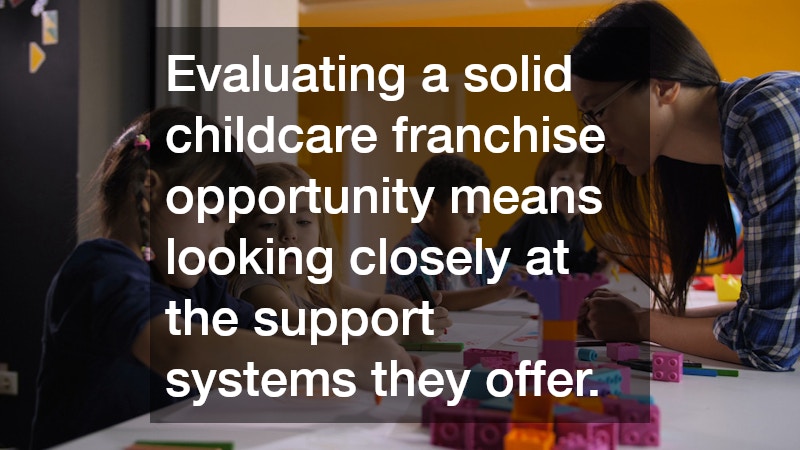
When you invest in a recognized brand, you bypass the most painful trial-and-error phases of entrepreneurship. You are essentially paying for a safety net. Evaluating a solid childcare franchise opportunity means looking closely at the support systems they offer. Top franchisors provide a proven blueprint that includes demographic research for site selection, architectural layouts that maximize classroom efficiency, proprietary curricula, and customized childcare management software.
The Financial Reality of the Transition
It is essential to be completely transparent about the financial timeline of this career pivot. Unlike a corporate job where your paycheck hits your bank account every two weeks without fail, building a profitable center takes time, patience, and significant upfront capital.
You must factor in the initial franchise fee, real estate build-out costs, commercial playground equipment, and insurance. Most importantly, you need enough working capital to sustain the business until your enrollment numbers reach the breakeven point. It is not uncommon for a new, ground-up center to take 12 to 18 months to reach full capacity. Before committing to any childcare franchise opportunity, you must work with a financial advisor and a specialized CPA to ensure you have the personal financial runway to survive the launch phase without drawing a large executive salary.
Weighing Autonomy Against Corporate Compliance
One of the primary reasons people leave corporate life is the desire to be their own boss. While owning a franchise technically makes you the boss of your local center, you still answer to a higher authority: the franchisor.
You must adhere to strict brand standards, operational guidelines, and mandatory fee structures—such as monthly royalties and advertising fund contributions. For some former executives, this feels too similar to having a corporate manager looking over their shoulder. For others, it is a welcome, structured framework that provides guidance and accountability. You have to decide if you are comfortable executing someone else’s proven playbook rather than having total creative control.
Conclusion
Escaping the corporate rat race to open an early learning center is a monumental life decision. It requires trading boardroom politics for staffing challenges, unannounced state inspections, and high-stakes parent communications. Yet, for the right professional, finding the perfect childcare franchise opportunity offers a rare blend of long-term wealth generation, equity building, and the deep satisfaction of leaving a lasting legacy in your community. If you are prepared for the financial commitment and the rigorous operational demands, it might just be the exit strategy you have been looking for.